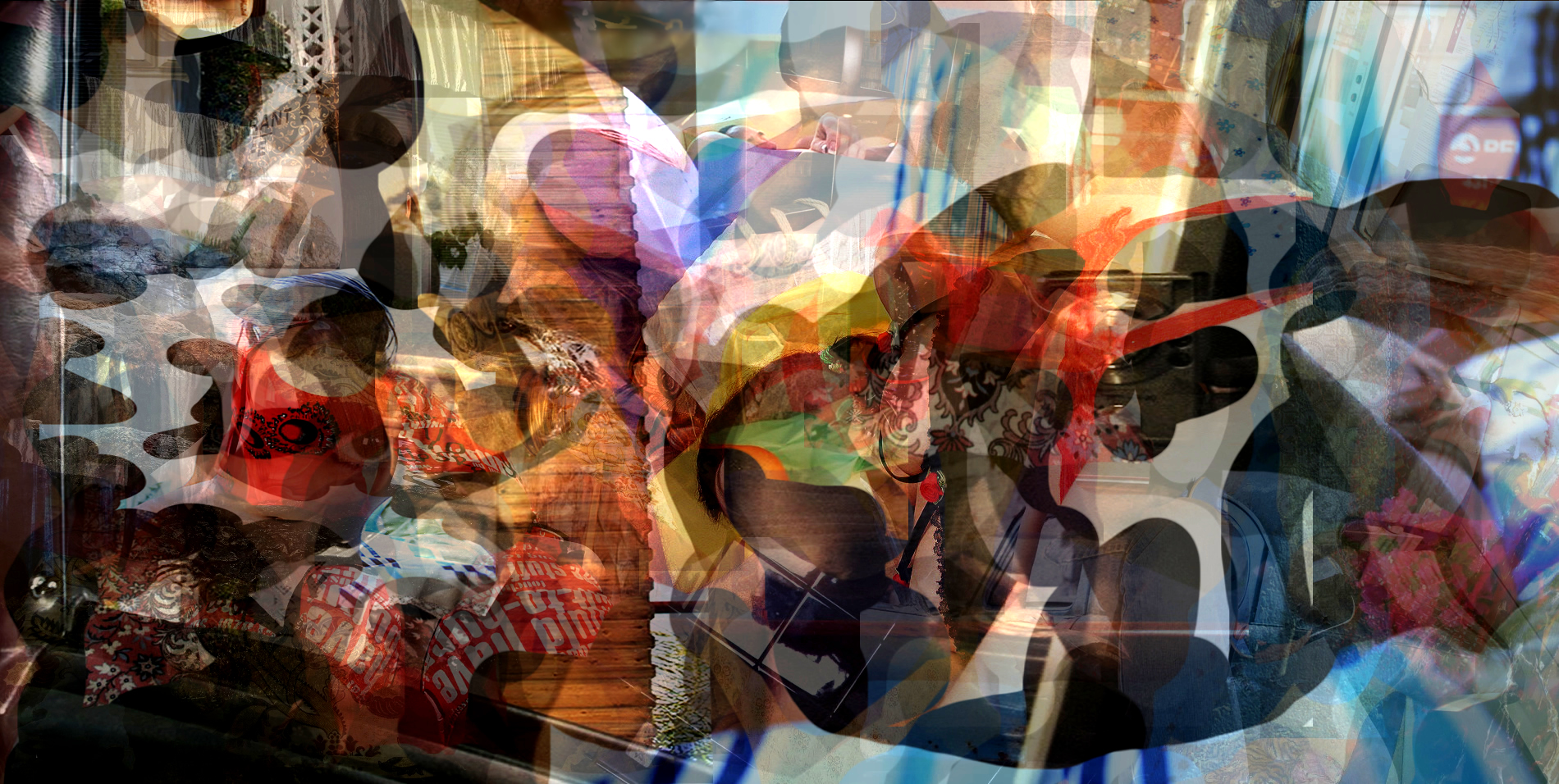

This work, therefore, is a counter proposal, not so much to the human sciences, as to the post-human humanities, the post-public cultural studies, and to post-curriculum education. It is an attempt to begin to map the background activities that undergird knowledge structures and catalyze the transformation of information into not so much knowledge, as socially-significant, culturally revitalizing forms of expression. This posits that the resources of meaning are among background, or discarded data, and its contextual significance. To find an adequate data source, therefore, I was compelled to find a source that was definitive of informational waste, when that term "waste" is so heavily loaded with deprecatory arbitrariness. This arbitrariness can be summed up in the saying "one person's garbage is another's treasure". Knowledge is played on the hegemonica. It is shored up through institutions, privatized and protected. Information, on the other hand, comes with no guarantees. It could just as easily turn out to be the wrong information, either by mistake, error, or intentional deception. Knowledge is transferable across situations in a way that information is not. Information is more constrained and subjective as to how it becomes meaningful. But this ought not to impose a necessarily utilitarian interpretation of information. Information serves purposes that are not governed exclusively by use values, but rather by a sensuous pleasure of being enveloped in a stimulating environment, whether virtual or otherwise.
In this condition of inflow data-ponics, the fast exchange and personal engagement of a constant datastream, virutal friendships and networks develop--mutual understandings and cycles of representational exchange take place via literacies of text, image, and sound. The commons thrives and culture is invigorated by nothing more than turning post culture compost when it starts to stink. And the stench goes sky-high, the gag of Lady Gaga. Thus recycling informational waste can be healthy for the information ecology and the vital cultural wealth it supports. The negative value we place on waste products of all kinds leaves an important meaning resource not only un-mined, but in many instances it has been removed from the informational commons through intellectual property law and the embargoes of the cultural industries. What we know so far is that information is a kind of top soil, full of shit, silt, and windblown seed, thought-burrs from which knowledge takes root. Below this is raw data. From data comes knowledge, min/e/d, processed into "information", a processing that includes giving it form, shape, relevance, each stage of which include principles of selection and reduction and what the educators of competency call comprehension.
The process of selection is key to any kind of research. Significance is only valid to particular aspects and angles on data, the part that is meaningful in the light of a given context and provocation, from the perspective of a research question and theoretical framework, at which point it becomes information, with its particular, and specified relevance. Knowledge exists at a further remove, one, we might add, that most information does not conform to. Yet this waste information is not, therefore, inherently useless. In fact, it may create the proper conditions that other information requires for conversion to knowledge, and for its a priori identification as knowledge-worthy during the extraction of data. This background of non-knowledge (unclassified information) on which knowledge is selectively discerned was of particular fascination to the French cultural theorist Georges Bataille. He liked to cross out portions of his texts, and in the opening essay collected in The Unfinished System of Nonknowledge (2001), he writes, and then deletes, this line: "All communication among men is rich with garbage." He tells his would-be spirtual explorers to get used to filth. And states that "a foul smell marks the presence of life." And thus it cannot be ignored. But what is this unattended mass of nonknowledge?
To find out, Bataille points us on the path of ecstasies, of being outside static, stable form. The ecstatic path–the journey through excess–leads not to knowledge, but to wisdom, according to the visionary Romantic poet William Blake. In the "Proverbs of Hell" he writes "The road of excess leads to the palace of wisdom". But what is excess, and waste, among information. Can waste information not become valuable knowledge under the correct circumstances? I may for example purchase a book, and leave it on my shelf unread for years. One day I discover that it concerns something of immediate necessity? How did I foretell its usefulness? Did it, or I, or unknown forces create the conditions by which my attention (and cash) would be duly rewarded? So what appears now to be background, insignificant nonknowledge does not preclude a later attentional shift. Neither knowledge nor information can be considered static characteristics. So here is the problem of sustainability: how to address condition in the information environment when such conditions are uncertainly founded on values that are by and large coincidental. I needed something that symbolized excessive wasteful communication. Something that social practices treated routinely and fundamentally as garbage. This is why I took up the notion of working with spam email. Next page
 .
.