Scroll and Codex
Title
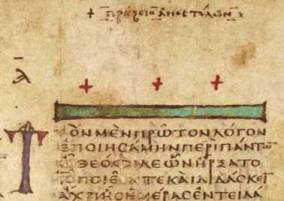
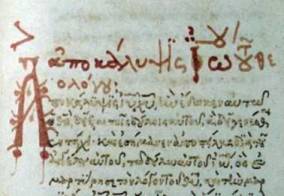
Acts and Title Revelation
Codex Vaticanus Graece
1209
The
Church Triumphant
And yet, the practical advantages of the codex in terms of size
and convenience and the better, more durable protection offered by its covers
were not, by themselves, sufficient reasons to replace the papyrus roll. That
impetus came from the early Christian church, which adopted the form of the
codex to differentiate its writings from the sacred books of Jewish scripture
(which could be copied only in the format of the roll) and from pagan
literature, which also was equated with the roll. More importantly, the codex
permitted longer texts, such as the Gospels, to be contained within a single
volume and to be referred to more easily. Although papyrus continued to be used
by official scribes and copying houses and for literary production, as was the
wooden tablet for more ephemeral material, by the second century AD, a shift
from papyrus roll to parchment codex was evident. By the fourth century AD,
Christianity had triumphed, and the codex replaced the roll, just as, in time,
parchment replaced papyrus.
It was a development in the history of the book as monumental as
the invention of printing a thousand years later.
Grout, J. (Ed.). (2002). Scroll and codex. In Encyclopaedia Romana.